
Sale!
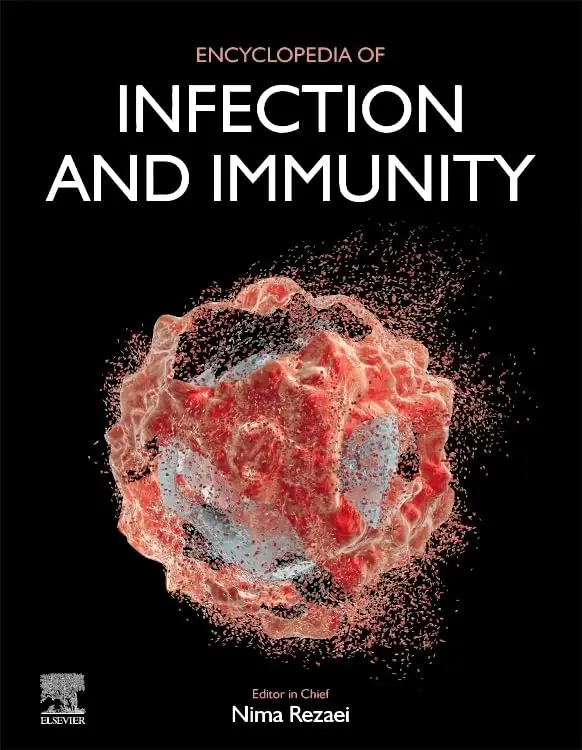
Encyclopedia of Infection and Immunity
Original price was: 2,800.00$.2,500.00$Current price is: 2,500.00$.
Encyclopedia of Infection and Immunity — A Comprehensive Guide to the Science of Infection, Immunity, and Human Health
The Encyclopedia of Infection and Immunity is a comprehensive reference resource for readers who want to explore the fascinating science behind infectious diseases, immune responses, pathogens, prevention, diagnosis, and the complex relationship between infection and the human immune system.
Infections and immunity are among the most important areas of modern biomedical science. Every day, the human immune system works to identify and respond to potentially harmful organisms, while viruses, bacteria, fungi, parasites, and other infectious agents continuously evolve different ways to survive and spread. Understanding this interaction is essential for anyone interested in microbiology, immunology, infectious diseases, medicine, biotechnology, public health, or biomedical research.
This encyclopedia brings together knowledge from these interconnected fields and provides an opportunity to explore how infections develop, how the immune system responds, and why some infections can become difficult to control.
What Can You Explore?
The subject of infection and immunity covers an enormous range of scientific topics. Depending on the individual entries and subjects included in the encyclopedia, readers can explore areas such as:
– Infectious diseases and their biological mechanisms
– Viruses, bacteria, fungi, and parasites
– Host–pathogen interactions
– Innate and adaptive immunity
– Immune cells and immune responses
– Antibodies and antigen recognition
– Inflammation and immune signaling
– Vaccination and immune protection
– Microbiology and microbial pathogenesis
– Emerging and re-emerging infections
– Antimicrobial resistance
– Infection prevention and control
– Diagnostic approaches
– Epidemiology and public health
– Immunological disorders
– Molecular and cellular mechanisms of infection
– Advances in infectious disease research
– The relationship between pathogens and the immune system
One of the most interesting aspects of infection biology is that disease is rarely a simple interaction between a pathogen and a person. The outcome can depend on the characteristics of the infectious organism, the host’s immune response, genetics, environment, previous exposure, and many other biological factors. Studying these interactions helps researchers understand why different infections can produce very different outcomes.
Why Infection and Immunity Matter
The immune system is one of the body’s most sophisticated defense networks. It must recognize potentially harmful organisms while maintaining the ability to distinguish between threats and the body’s own tissues.
When an infectious organism enters the body, multiple layers of defense can become involved. Physical barriers, innate immune mechanisms, immune cells, antibodies, signaling molecules, and adaptive immune responses can all contribute to protection.
At the same time, pathogens have developed highly sophisticated strategies for avoiding or modifying immune responses. Some can change rapidly, some interfere with immune signaling, and others can establish long-lasting relationships with their hosts.
This continuous interaction between host and pathogen is a major reason infection and immunity remain important research fields.
A Valuable Resource for Learning and Research
The Encyclopedia of Infection and Immunity can be particularly useful for students, educators, researchers, healthcare and life-science professionals, and readers who want a deeper understanding of infectious disease and immunological science.
Students can use an encyclopedia as a starting point when studying microbiology, immunology, infectious diseases, molecular biology, or related subjects. Researchers and professionals may also find broad reference material useful when reviewing concepts outside their immediate specialization.
For educators, comprehensive reference resources can provide useful background when preparing lectures, educational materials, or discussions about infection and immune responses.
Rather than focusing on only one pathogen or one aspect of the immune system, an encyclopedia-style resource can help readers connect concepts across different areas of biomedical science.
Understanding the Host–Pathogen Relationship
One of the central themes in infection and immunity is the relationship between a pathogen and its host.
A pathogen does not simply cause disease independently. Its effects can depend on how it interacts with host cells, how effectively the immune system recognizes it, and how the pathogen responds to the host’s defenses.
Researchers study questions such as:
How does the immune system recognize an invading organism?
Why can some infections remain localized while others become widespread?
How do pathogens interact with host cells?
How does previous exposure influence immune responses?
Why can immune responses sometimes contribute to tissue damage?
How do pathogens evolve mechanisms that allow them to persist?
These questions are important not only for understanding disease but also for developing better strategies for prevention, diagnosis, and treatment.
Immunity and Modern Biomedical Science
Modern research has transformed our understanding of immunity. Scientists now study immune responses at molecular, cellular, genetic, and systems levels.
Advances in genomics, molecular biology, bioinformatics, imaging, and biotechnology have allowed researchers to investigate infectious diseases with increasing precision.
This research contributes to the development of new diagnostic technologies, vaccines, antimicrobial strategies, immunological therapies, and approaches to disease prevention.
The field is also closely connected to other areas of science, including genetics, cancer biology, microbiology, epidemiology, biotechnology, and public health.
Who May Find This Encyclopedia Useful?
This resource may be valuable for:
Students — Especially those studying biology, microbiology, immunology, medicine, biotechnology, or related subjects.
Researchers — Useful as a broad reference source when exploring infection, immunity, pathogens, or host–pathogen interactions.
Educators — Helpful for building background knowledge and developing educational materials.
Healthcare and Life-Science Professionals — A potential reference for reviewing concepts related to infectious diseases and immune mechanisms.
Science Enthusiasts — Suitable for readers who want to understand more about how infectious organisms interact with the human body and immune system.
Explore the Science Behind Infection and Immunity
Infection and immunity are rapidly evolving fields. New pathogens emerge, existing organisms develop resistance, and researchers continue to discover previously unknown mechanisms of immune regulation.
At the same time, advances in immunology are creating new opportunities for disease prevention, diagnosis, and treatment.
An encyclopedia dedicated to infection and immunity can therefore serve as a valuable gateway into this broad scientific landscape.
Whether you are beginning your studies, conducting research, teaching biomedical science, or simply interested in understanding the science of infectious diseases, the Encyclopedia of Infection and Immunity offers an opportunity to explore a wide range of interconnected concepts.
Explore the Encyclopedia of Infection and Immunity to discover more about pathogens, immune responses, infectious diseases, host–pathogen interactions, and the rapidly developing science of infection and immunity.
Note: This is an educational/reference resource and should not be used as a substitute for professional medical advice, diagnosis, or treatment.
Affiliate Marketing
Related products
-
Sale!

Marketing Strategy
Original price was: 280.00$.250.00$Current price is: 250.00$. Order Now -
Sale!
Artificial Intelligence in Medicine
Original price was: 1,150.00$.1,010.00$Current price is: 1,010.00$. Order Now -
Sale!
Modern Digital Assisting
Original price was: 160.00$.135.00$Current price is: 135.00$. Order Now -
Sale!
Encyclopedia of Primary Prevention and Health Promotion
Original price was: 1,400.00$.1,200.00$Current price is: 1,200.00$. Order Now
Reviews
There are no reviews yet.