
Description
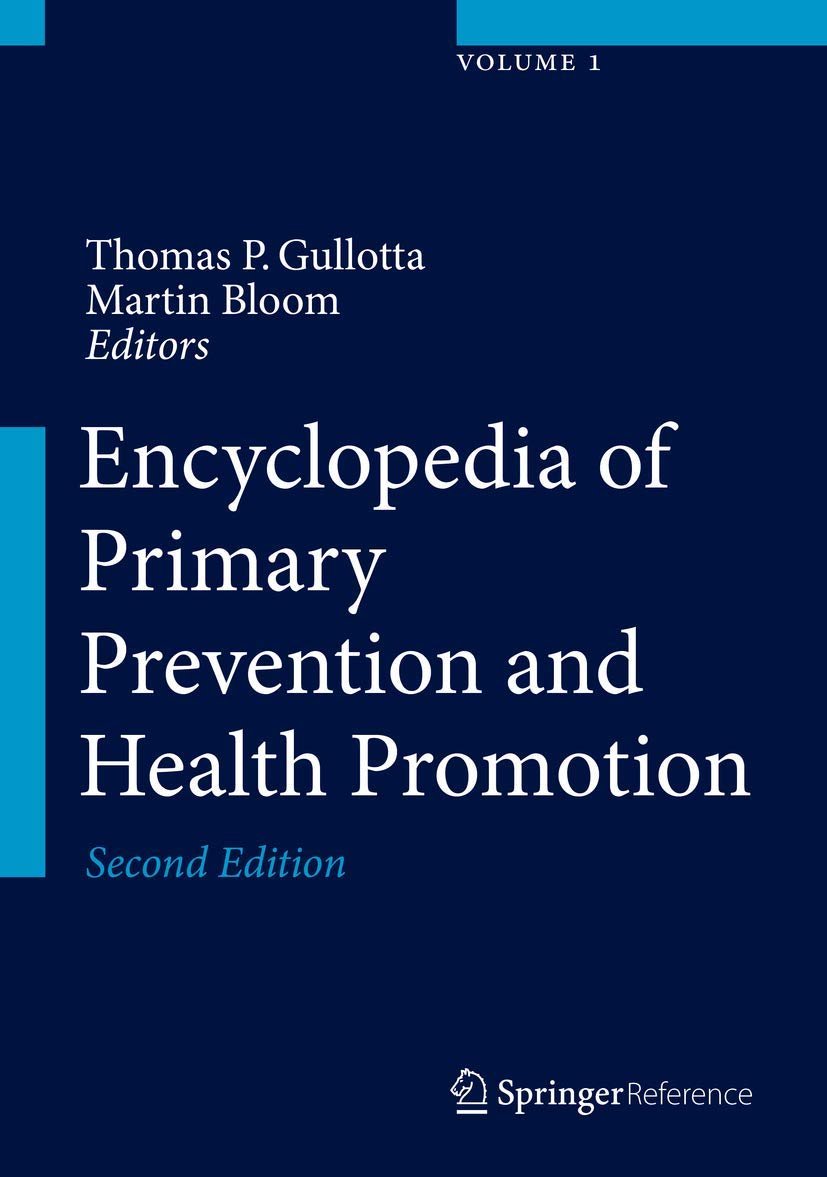
Encyclopedia of Primary Prevention and Health Promotion
Encyclopedia of Primary Prevention and Health Promotion is a comprehensive reference work focused on the principles, strategies, research, and practical applications of preventing disease and promoting health before serious health problems develop. It brings together information from public health, medicine, behavioral science, psychology, epidemiology, health education, community health, and related disciplines to provide a broad understanding of how health outcomes can be improved through proactive prevention.
The central focus of primary prevention is to reduce the likelihood that diseases, injuries, and other health problems will occur in the first place. Rather than concentrating only on diagnosing or treating existing conditions, primary prevention emphasizes identifying risk factors and protective factors early and taking appropriate action to maintain and improve health. The encyclopedia explores these concepts in a structured way, making it a useful resource for understanding how prevention can operate at individual, family, community, organizational, and population levels.
A major strength of the encyclopedia is its multidisciplinary perspective. Health is influenced by much more than medical treatment alone, and effective prevention often requires cooperation between healthcare professionals, educators, policymakers, researchers, community organizations, and individuals. Topics connected with health behavior, lifestyle, environmental influences, social conditions, education, public policy, and access to healthcare can therefore be considered alongside traditional medical approaches.
The work provides valuable background on important principles of health promotion. Health promotion generally seeks to give people and communities greater ability to improve and maintain their health. This can involve encouraging healthy behaviors, improving health literacy, creating supportive environments, strengthening community resources, and developing policies that make healthier choices more achievable. The encyclopedia helps demonstrate how these approaches can work together rather than treating health as an issue that depends solely on individual decisions.
Another important area covered by a reference work of this nature is the identification and management of risk factors. Risk factors may include behavioral, biological, environmental, social, and socioeconomic influences. Understanding these factors allows prevention programs to be designed around specific populations and health challenges. At the same time, prevention research also considers protective factors—conditions and behaviors that can help people maintain well-being and reduce vulnerability to disease.
The encyclopedia is particularly relevant to the study of preventive healthcare and public health because prevention can occur at many stages of life. Health promotion strategies may be designed for children, adolescents, adults, older adults, families, workplaces, schools, and communities. Different populations have different needs, risks, resources, and barriers, so effective prevention requires approaches that are appropriate to the people and environments being served.
Health education is another significant component of prevention. Providing accurate and understandable information can help people make informed decisions about their health. However, effective health promotion goes beyond simply distributing information. It can also involve developing skills, improving access to resources, addressing social and environmental barriers, and creating supportive conditions that make healthy behaviors easier to maintain.
The book is also useful for understanding the importance of evidence-based prevention. Public health interventions need to be evaluated to determine whether they actually produce meaningful improvements. Research methods, epidemiological evidence, program evaluation, and outcome measurement are therefore important for identifying which strategies are effective and which approaches may need improvement. Evidence-based practice helps professionals use scientific knowledge when developing and implementing prevention programs.
Community participation is another important theme in modern health promotion. Health interventions are often more effective when communities are involved in identifying problems, setting priorities, designing solutions, and evaluating outcomes. Community-based approaches can take local culture, resources, needs, and circumstances into account while encouraging cooperation and long-term engagement.
The encyclopedia can also help readers understand how public policy influences health. Laws, regulations, healthcare systems, educational policies, workplace standards, environmental policies, and community planning can all influence exposure to risks and access to protective resources. Prevention therefore involves not only personal choices but also the broader systems and environments in which people live.
Environmental and social determinants of health are especially important because individuals do not make health decisions in isolation. Housing, education, employment, income, neighborhood conditions, social support, access to healthcare, and environmental quality can influence health outcomes. Recognizing these factors provides a broader understanding of why prevention strategies must sometimes address structural and community-level conditions.
For students and professionals, the encyclopedia can serve as a valuable reference for learning terminology, concepts, research perspectives, and practical approaches associated with primary prevention and health promotion. It may be particularly useful for students of public health, medicine, nursing, psychology, health education, epidemiology, social sciences, and related fields. Researchers and practitioners can also use such a reference to develop a stronger conceptual foundation for designing or evaluating prevention initiatives.
Overall, Encyclopedia of Primary Prevention and Health Promotion presents health prevention as a proactive, multidisciplinary process. Its subject matter helps readers understand how disease prevention, health education, behavior change, community action, environmental improvement, research, and public policy can work together to improve health outcomes. By emphasizing prevention before illness develops and promoting healthier individuals and communities, the encyclopedia provides a broad foundation for understanding one of the most important goals of modern public health: helping people live healthier lives while reducing preventable disease and health risks.



Reviews
There are no reviews yet.