
Description
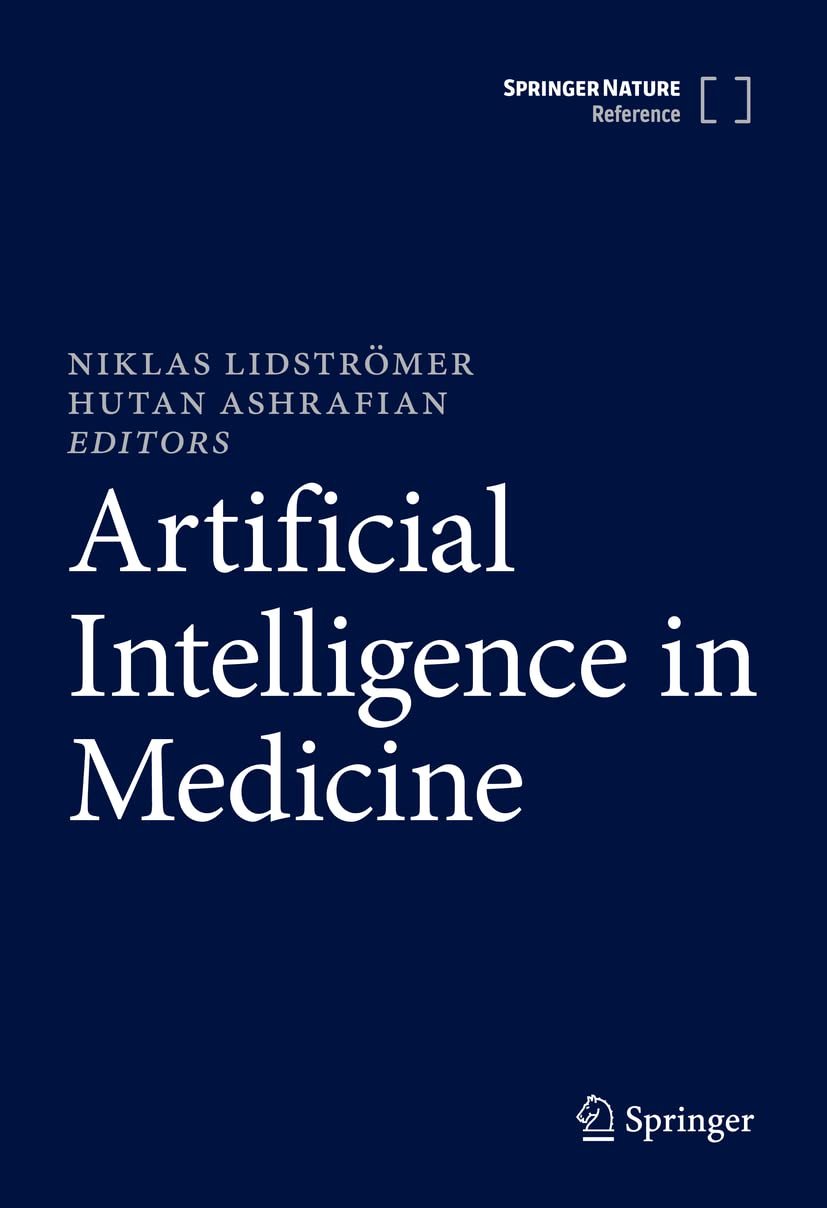
Artificial Intelligence in Medicine — Book Description
Artificial Intelligence in Medicine explores the rapidly evolving relationship between artificial intelligence (AI) and modern healthcare. As medicine becomes increasingly data-driven, AI is emerging as a powerful technology capable of supporting clinicians, researchers, healthcare organizations, and patients in making better-informed decisions. This book provides a comprehensive introduction to the principles, technologies, applications, opportunities, and challenges associated with artificial intelligence in healthcare and medical practice.
The development of AI has transformed many areas of medicine. From analyzing medical images and identifying patterns in large datasets to assisting with clinical decision-making and discovering potential treatments, intelligent computer systems are becoming increasingly important in healthcare environments. This book examines how these technologies work and, more importantly, how they can be applied responsibly to real-world medical problems.
A major focus of the book is machine learning, one of the most important components of modern artificial intelligence. Readers are introduced to the basic concepts behind supervised learning, unsupervised learning, classification, prediction, pattern recognition, and other approaches used to process medical data. The book explains how machine-learning systems can learn from large collections of clinical information and assist healthcare professionals in recognizing patterns that may be difficult to identify manually.
Another important area covered is deep learning and neural networks. These technologies have played a significant role in recent advances in medical imaging and automated pattern recognition. The book discusses how deep-learning models can be applied to areas such as radiology, pathology, dermatology, ophthalmology, and other fields where visual information plays an important role. It also considers the limitations of these systems and explains why human clinical expertise remains essential.
Medical imaging and computer vision represent some of the most established applications of AI in medicine. Artificial intelligence can assist in analyzing X-rays, CT scans, MRI images, ultrasound examinations, and other forms of diagnostic imaging. This book explores how AI-based systems can help identify abnormalities, classify findings, prioritize cases, and support radiologists and other specialists. Rather than presenting AI as a replacement for healthcare professionals, the book emphasizes its potential as a decision-support technology that can complement human expertise.
The book also examines the role of AI in clinical decision support systems. Healthcare professionals often need to evaluate large amounts of information, including medical histories, laboratory results, imaging findings, medications, and clinical guidelines. AI can help organize and analyze this information, potentially allowing clinicians to identify relevant patterns and consider appropriate diagnostic or treatment options. The book discusses both the benefits and the risks of relying on algorithmic recommendations in clinical environments.
Natural language processing (NLP) is another important topic. Much of the information generated in healthcare exists in unstructured forms such as clinical notes, medical reports, research papers, and electronic health records. NLP technologies can help computers understand and process human language, making it possible to extract useful information from large collections of medical text. The book explores applications such as clinical documentation, information extraction, medical literature analysis, patient communication, and healthcare-related language technologies.
Artificial intelligence is also becoming increasingly relevant to drug discovery and medical research. Traditional drug-development processes can be lengthy and expensive. AI can assist researchers by analyzing biological data, identifying potential drug candidates, predicting molecular properties, and exploring relationships between diseases, genes, proteins, and treatments. This book introduces the potential of AI-driven research while also recognizing that laboratory validation, clinical trials, regulatory review, and scientific evidence remain essential.
Another growing area is personalized and precision medicine. Every patient is different, and treatment strategies may vary depending on genetics, lifestyle, medical history, environmental factors, and other characteristics. AI can process complex datasets and help researchers and clinicians identify patterns that may contribute to more individualized healthcare. The book explains how artificial intelligence can contribute to risk prediction, patient stratification, treatment planning, and personalized healthcare while highlighting the importance of clinical validation.
The book also considers the use of AI in remote healthcare, telemedicine, and patient monitoring. Wearable devices, mobile applications, connected medical equipment, and digital health platforms can generate continuous streams of health-related data. AI systems may help analyze these data and identify changes that require attention. Such technologies could support preventive healthcare and remote monitoring, particularly when combined with appropriate clinical oversight.
However, the integration of artificial intelligence into medicine raises significant ethical, legal, and social questions. AI systems can produce inaccurate predictions, reflect biases present in their training data, or behave differently across patient populations. Issues related to privacy, informed consent, transparency, accountability, data security, and fairness are therefore central to the responsible use of AI in healthcare. This book explores these challenges and emphasizes the need for carefully designed systems, high-quality data, rigorous validation, and appropriate human oversight.
Explainability and transparency are particularly important in medical AI. A healthcare professional may need to understand why an algorithm produced a particular prediction before using that information in patient care. The book discusses the importance of interpretable models, explainable AI techniques, and transparent evaluation processes. It also highlights the difference between technical performance and actual clinical usefulness: an AI model may perform well in a controlled dataset but still face challenges when deployed in diverse real-world healthcare environments.
Data quality is another major theme. Medical AI depends heavily on reliable and representative datasets. Missing information, inconsistent records, measurement errors, and demographic imbalances can negatively affect model performance. The book explains why data collection, preprocessing, validation, security, and governance are fundamental parts of successful healthcare AI projects.
The book further discusses human-AI collaboration. The most valuable future of medical AI may not involve humans versus machines, but rather humans working together with intelligent technologies. Physicians, nurses, researchers, technicians, and other healthcare professionals can use AI tools to support their work while applying professional judgment, experience, communication skills, and ethical responsibility. Understanding this relationship is essential for designing AI systems that are useful, safe, and clinically meaningful.
For students, researchers, healthcare professionals, technology enthusiasts, and anyone interested in the future of medicine, Artificial Intelligence in Medicine provides a broad overview of one of the most important technological developments in contemporary healthcare. It connects fundamental AI concepts with practical medical applications and examines both the opportunities and limitations of intelligent healthcare technologies.
Ultimately, artificial intelligence has the potential to improve many aspects of healthcare, but its successful implementation requires more than sophisticated algorithms. It requires high-quality data, rigorous scientific evaluation, appropriate regulation, clinical expertise, ethical responsibility, and continuous monitoring. Artificial Intelligence in Medicine offers readers a balanced understanding of this evolving field and provides valuable insight into how intelligent technologies may shape diagnosis, treatment, research, healthcare delivery, and medical decision-making in the years ahead.


Reviews
There are no reviews yet.