
Description
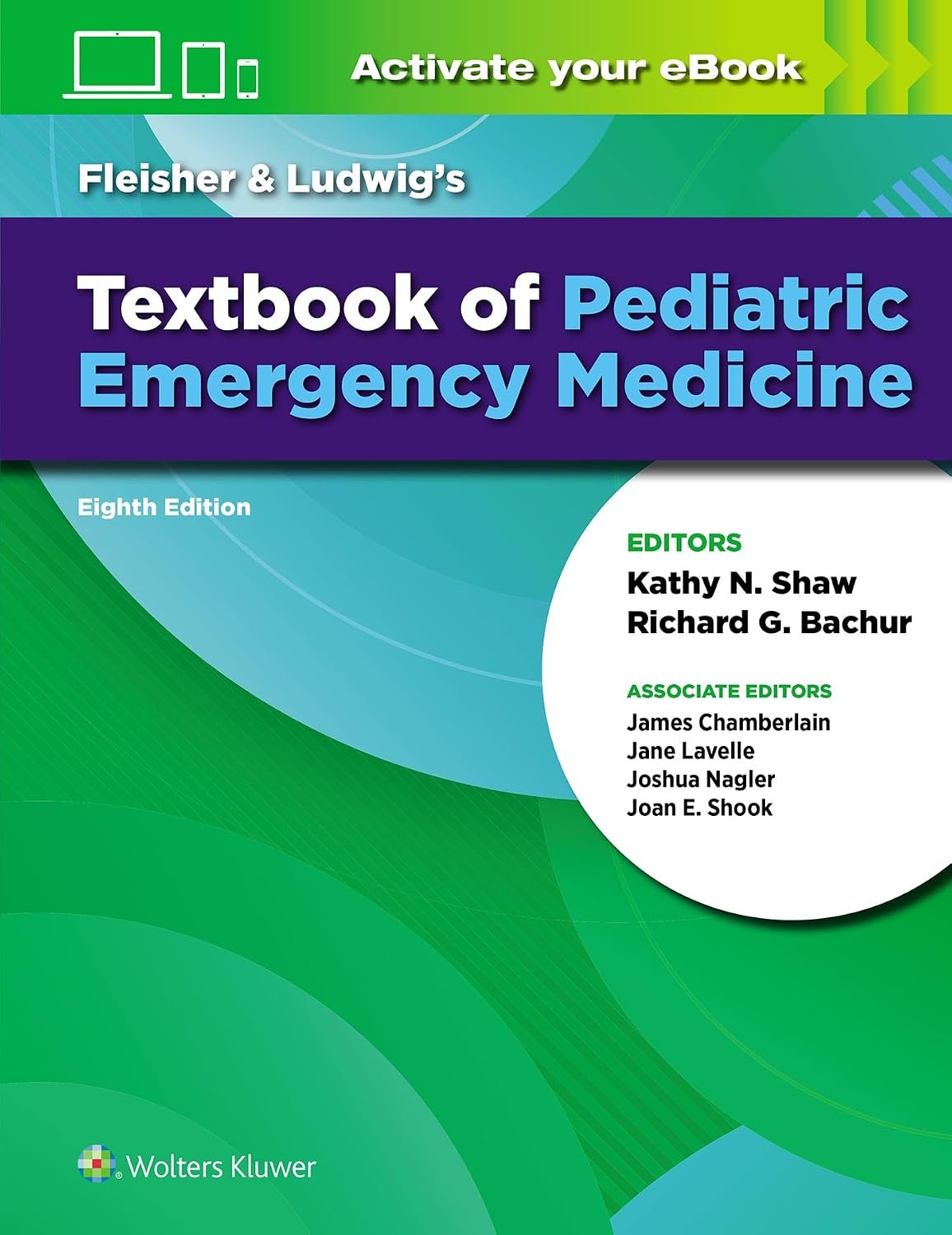
Fleisher & Ludwig’s Textbook of Pediatric Emergency Medicine — Book Description
Fleisher & Ludwig’s Textbook of Pediatric Emergency Medicine is a comprehensive educational reference focused on the evaluation, diagnosis, stabilization, and management of children and adolescents presenting with acute illness and injury. Pediatric emergency medicine requires a specialized approach because infants, children, and adolescents differ from adults in anatomy, physiology, development, communication, and patterns of disease. This book provides an extensive foundation for understanding the unique challenges involved in caring for young patients in emergency settings.
Pediatric emergency departments frequently encounter a remarkably broad range of clinical presentations. Children may arrive with fever, breathing difficulties, abdominal complaints, injuries, seizures, altered behavior, dehydration, infections, allergic reactions, or other urgent conditions. Some patients may appear relatively well despite having a serious underlying illness, while others may have dramatic symptoms associated with conditions that are less dangerous. For this reason, pediatric emergency care depends on careful assessment, recognition of warning signs, appropriate diagnostic reasoning, and continuous reassessment.
A major focus of the book is the initial assessment and stabilization of the critically ill or injured child. Pediatric patients can deteriorate quickly, making early recognition of serious illness particularly important. The text provides an organized framework for approaching emergency presentations, prioritizing immediate concerns, assessing vital functions, and determining the level of care required. It emphasizes the importance of systematic evaluation while recognizing the differences between infants, young children, older children, and adolescents.
The book provides extensive coverage of pediatric respiratory emergencies, which are among the most common reasons children require urgent medical evaluation. Breathing difficulties in children can arise from numerous causes, including infections, airway problems, reactive airway conditions, and other acute disorders. Understanding age-specific presentations and recognizing signs of respiratory compromise are essential components of pediatric emergency practice. The text explores these concepts within the broader framework of emergency assessment and management.
Fever and infectious illnesses are another major area of pediatric emergency medicine. Fever is extremely common in children, but its clinical significance varies according to age, symptoms, examination findings, immune status, and other factors. The book discusses approaches to evaluating febrile children and identifying patients who may require urgent investigation or treatment. It also addresses a wide range of infectious presentations encountered in emergency settings.
The text examines neurologic emergencies in children, including presentations involving seizures, altered mental status, severe headaches, weakness, and other neurologic abnormalities. Pediatric neurologic assessment requires consideration of developmental stage and age-appropriate communication. The book provides a framework for evaluating these symptoms and recognizing conditions that may require urgent attention.
Pediatric trauma and injury represent another essential component of emergency care. Children may present after falls, traffic-related incidents, sports injuries, accidental events, or other forms of trauma. Their developing bodies can respond differently to injury than adult bodies, and their ability to describe symptoms may be limited by age. The book explores principles of pediatric trauma assessment, injury recognition, stabilization, diagnostic evaluation, and coordination of care.
A particularly important feature of pediatric emergency medicine is the need to consider age and developmental stage. Infants may be unable to communicate symptoms verbally, while young children may describe discomfort in nonspecific ways. Adolescents may have different medical, social, and behavioral considerations. Throughout the book, pediatric emergency assessment is presented with attention to these developmental differences.
The book also addresses gastrointestinal and abdominal emergencies. Abdominal pain, vomiting, diarrhea, gastrointestinal bleeding, and other digestive symptoms are common pediatric complaints. Determining whether symptoms represent a self-limited illness or a more serious condition requires careful history-taking, physical examination, and clinical reasoning. The text explores approaches to evaluating these presentations and identifying important diagnostic possibilities.
Dehydration and fluid-related problems are particularly relevant in pediatric patients. Children can experience significant fluid and electrolyte disturbances during illnesses involving vomiting, diarrhea, fever, or inadequate intake. The book discusses principles of recognizing dehydration, assessing severity, and understanding appropriate emergency management strategies.
Another important area is allergic and immunologic emergencies. Children may present with allergic reactions ranging from mild symptoms to serious systemic conditions. Emergency clinicians must be able to recognize concerning patterns and respond appropriately. The text provides an educational overview of these presentations and the principles involved in emergency evaluation.
The book also covers endocrine and metabolic emergencies, hematologic conditions, renal and urologic problems, cardiovascular presentations, and other less common but clinically important pediatric emergencies. Because emergency physicians must be prepared for a wide variety of conditions, broad knowledge across multiple medical specialties is essential.
Toxicologic and environmental emergencies are also considered. Pediatric patients can encounter potentially harmful substances or environmental conditions through accidental exposure and other circumstances. Recognizing unusual symptoms, understanding the clinical context, and conducting appropriate assessment are important aspects of emergency care. The book provides a structured educational perspective on these situations.
The text gives attention to pediatric emergencies involving newborns and young infants, who require particularly careful assessment. Very young patients may have limited physiological reserves and may present with subtle or nonspecific signs of illness. The book explores the challenges of assessing these patients and emphasizes careful observation, age-specific evaluation, and recognition of potentially serious conditions.
Adolescent emergency medicine introduces additional considerations. Older children and adolescents may present with medical complaints alongside developmental, behavioral, or social factors that influence their care. Effective communication, privacy considerations, appropriate history-taking, and respectful clinical interaction are important components of emergency evaluation.
Mental and behavioral health also form an important part of pediatric emergency care. The book addresses behavioral and psychiatric presentations, including acute changes in behavior, emotional distress, and other situations requiring emergency assessment. These cases require careful attention to safety, communication, family involvement, and appropriate clinical evaluation.
Another important aspect of the book is diagnostic reasoning. Pediatric symptoms can be nonspecific, and common complaints may have many possible causes. Emergency clinicians must consider both common diagnoses and potentially dangerous conditions. The book encourages structured thinking by connecting patient history, physical findings, diagnostic tests, age, risk factors, and clinical progression.
Modern pediatric emergency medicine also relies on laboratory testing, imaging, point-of-care technologies, and other diagnostic tools. The book discusses the role of diagnostic evaluation within the overall clinical picture. Rather than treating test results as isolated answers, emergency clinicians must interpret them alongside the patient’s presentation and continuously reassess whether the working diagnosis remains appropriate.
Family-centered care and communication are especially important in pediatric medicine. Children often depend on parents or caregivers for medical history, support, and decision-making. Emergency clinicians must communicate clearly with both young patients and their caregivers while maintaining respect for the child’s developmental level and individual needs. The book highlights the importance of effective communication as part of high-quality pediatric emergency care.
The book also emphasizes multidisciplinary teamwork. Pediatric emergency care may involve emergency physicians, pediatric specialists, nurses, paramedics, respiratory therapists, pharmacists, technicians, social workers, and other professionals. Coordinated teamwork is particularly valuable during serious emergencies where rapid assessment and intervention are required.
Evidence-based practice is another central component. Pediatric medicine continues to develop as new research, diagnostic technologies, treatment approaches, and clinical recommendations emerge. A comprehensive textbook helps learners understand established principles while encouraging continued education and critical evaluation of new evidence.
Fleisher & Ludwig’s Textbook of Pediatric Emergency Medicine is therefore a valuable resource for medical students, residents, pediatric emergency medicine trainees, emergency physicians, pediatricians, nurses, educators, and other healthcare professionals seeking a deeper understanding of acute pediatric care. Its broad scope allows readers to explore both common emergency presentations and complex clinical problems that require specialized knowledge.
Ultimately, pediatric emergency medicine is centered on early recognition, careful assessment, stabilization, appropriate diagnosis, timely management, and continuous reassessment. Caring for children in emergency settings requires not only medical knowledge but also an understanding of developmental differences, family dynamics, communication, patient safety, and multidisciplinary collaboration.
By bringing together these essential concepts, Fleisher & Ludwig’s Textbook of Pediatric Emergency Medicine provides a comprehensive foundation for understanding the challenges and responsibilities of emergency care for children and adolescents. It serves as an educational guide to the principles of pediatric emergency evaluation while reinforcing the importance of thoughtful clinical reasoning, evidence-based practice, teamwork, and compassionate patient-centered care.




Reviews
There are no reviews yet.