
Description
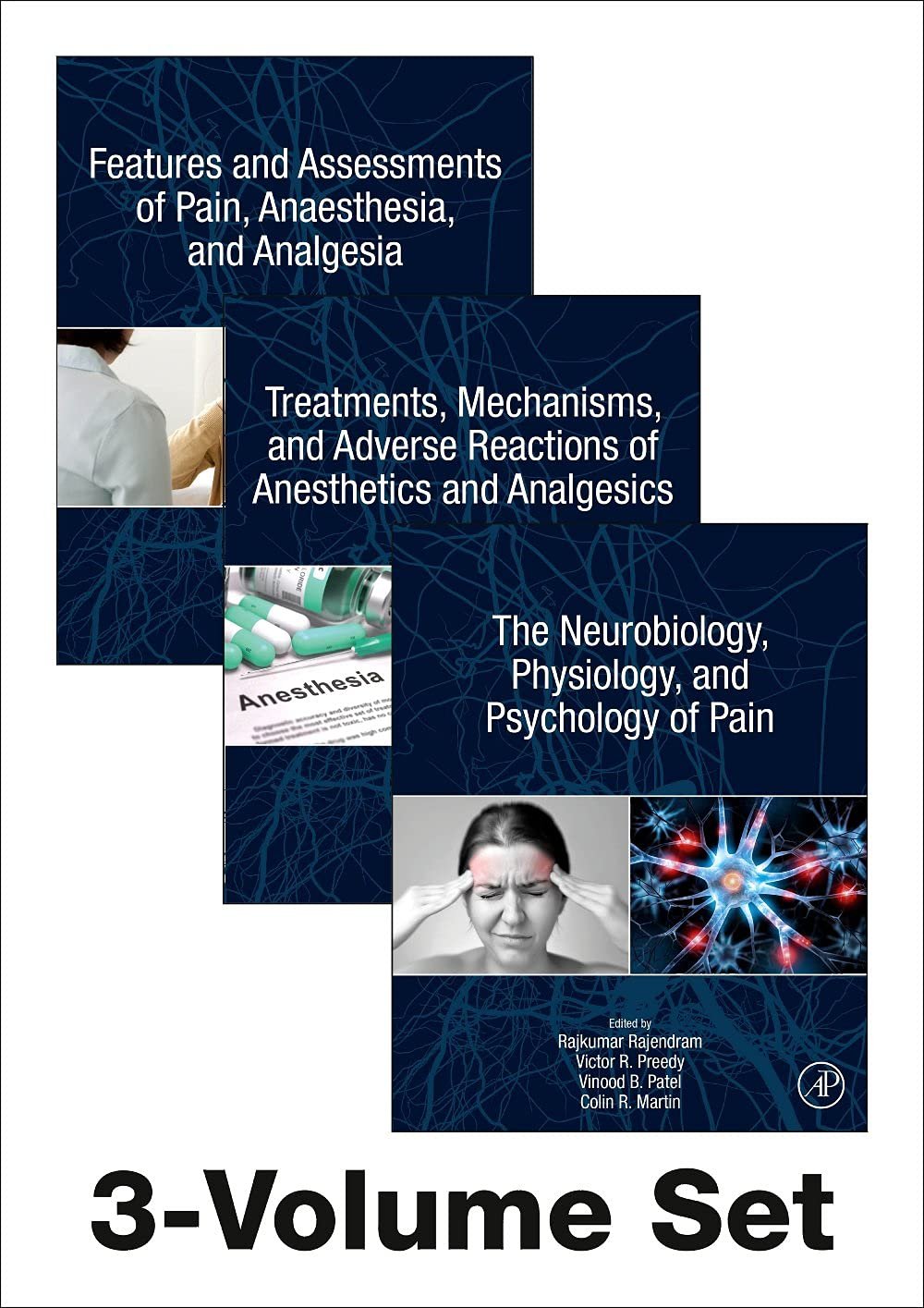
The Neuroscience of Pain, Anesthetics, and Analgesics
The Neuroscience of Pain, Anesthetics, and Analgesics is an engaging and comprehensive exploration of one of the most fascinating areas of modern neuroscience and medicine: how the human nervous system detects, processes, interprets, and responds to pain, and how anesthetics and analgesic medications can alter these processes. Bringing together concepts from neuroscience, neurobiology, pharmacology, physiology, and clinical medicine, this book provides readers with a deeper understanding of the complex biological mechanisms underlying pain and the scientific principles behind its treatment.
Pain is far more than a simple response to physical injury. It is a sophisticated sensory and emotional experience created through interactions among peripheral nerves, the spinal cord, the brain, neurotransmitters, receptors, and higher-order neural networks. The book examines how potentially harmful stimuli are detected by specialized sensory neurons called nociceptors and how signals are transmitted through the nervous system. It explores the pathways that carry pain-related information from peripheral tissues to the spinal cord and ultimately to different regions of the brain responsible for sensory perception, emotional responses, attention, memory, and behavioral reactions.
A major strength of this book is its focus on the neuroscience of pain rather than treating pain simply as a symptom. Readers are introduced to the distinction between nociception and the subjective experience of pain, helping explain why the intensity of pain does not always correspond directly to the extent of tissue injury. The book explores concepts such as peripheral sensitization, central sensitization, inflammatory pain, neuropathic pain, acute pain, and chronic pain. These mechanisms help explain why some pain conditions can persist long after the original injury has healed and why individuals can experience pain in very different ways.
The role of the spinal cord and brain in pain processing receives particular attention. The book examines how incoming sensory signals are modified within the spinal cord before reaching higher brain regions and discusses descending neural systems that can either enhance or suppress pain. Readers can discover how neurotransmitters, receptors, neural circuits, and endogenous pain-control systems contribute to these processes. The involvement of structures such as the thalamus, brainstem, limbic system, and cortical regions provides an important foundation for understanding pain as a multidimensional neurological experience.
Another central topic is anesthesia. Anesthetics have transformed modern medicine by allowing patients to undergo surgical and other medical procedures without experiencing the full awareness and discomfort that would otherwise accompany them. This book examines the neuroscience and pharmacology behind anesthetic states, including how different anesthetic agents influence neuronal communication and brain activity. It discusses the mechanisms involved in producing effects such as unconsciousness, reduced awareness, immobility, amnesia, and diminished responses to painful stimuli.
Rather than presenting anesthesia as a single phenomenon, the book explores it as a complex interaction among multiple neural processes. Readers gain insight into how anesthetic drugs can affect ion channels, neurotransmitter systems, synaptic communication, and large-scale brain networks. The differences between general anesthesia, regional anesthesia, and local anesthesia are also important to understanding how clinicians can target different parts of the nervous system depending on the medical procedure and patient needs.
The book also provides an in-depth look at analgesics, the medications used to reduce or relieve pain. It examines several major classes of pain-relieving drugs and explains how they act on different biological targets. By connecting pharmacological mechanisms with neural pathways, the book helps readers understand why different medications may be selected for different types of pain. It also explores how analgesic effects can vary according to the underlying mechanism of pain, the patient’s nervous system, and other biological factors.
Particular attention is given to the scientific principles behind opioid and non-opioid analgesia. Readers can learn about the receptors and neural pathways involved in opioid-mediated pain modulation, while also examining the broader challenges associated with these medications. The discussion provides an educational framework for understanding both their therapeutic importance and the complex biological and clinical considerations surrounding their use. Non-opioid approaches and other pharmacological strategies further demonstrate that pain management is not based on a single medication or mechanism.
Beyond medications, the book highlights the importance of understanding pain from a broader biological perspective. Psychological processes, attention, stress, emotions, expectations, learning, and previous experiences can influence how pain is perceived and processed. This integrated perspective demonstrates why effective pain management often requires more than simply suppressing a neural signal. Understanding the interaction between the nervous system and the individual’s broader physiological and psychological state can provide valuable insight into modern approaches to pain care.
The Neuroscience of Pain, Anesthetics, and Analgesics is particularly useful for students, researchers, healthcare professionals, and readers interested in neuroscience, pharmacology, anesthesiology, medicine, and human physiology. It can serve as a valuable educational resource for developing a conceptual understanding of pain pathways, anesthetic mechanisms, analgesic pharmacology, and the neural basis of sensory perception.
The book also offers an opportunity to appreciate how advances in neuroscience continue to influence medical practice. As researchers learn more about neural circuits, receptors, molecular signaling, and individual differences in pain processing, new approaches to pain treatment and anesthesia continue to emerge. Understanding these developments requires a strong foundation in the basic science of the nervous system, and this book provides that foundation in an accessible and scientifically oriented manner.
Overall, The Neuroscience of Pain, Anesthetics, and Analgesics presents pain as a dynamic neurological process rather than a simple signal of injury. By connecting fundamental neuroscience with pharmacology and clinical concepts, it creates a comprehensive picture of how pain is detected, transmitted, modified, perceived, and treated. From the microscopic activity of receptors and ion channels to the coordinated activity of large-scale brain networks, the book demonstrates the remarkable complexity of the nervous system and its role in one of the most important sensory experiences known to humans.
For anyone seeking a deeper understanding of how the brain and nervous system interact with pain, anesthesia, and analgesic therapies, this book offers a valuable journey through the science behind these essential areas of modern medicine.



Reviews
There are no reviews yet.