
Description
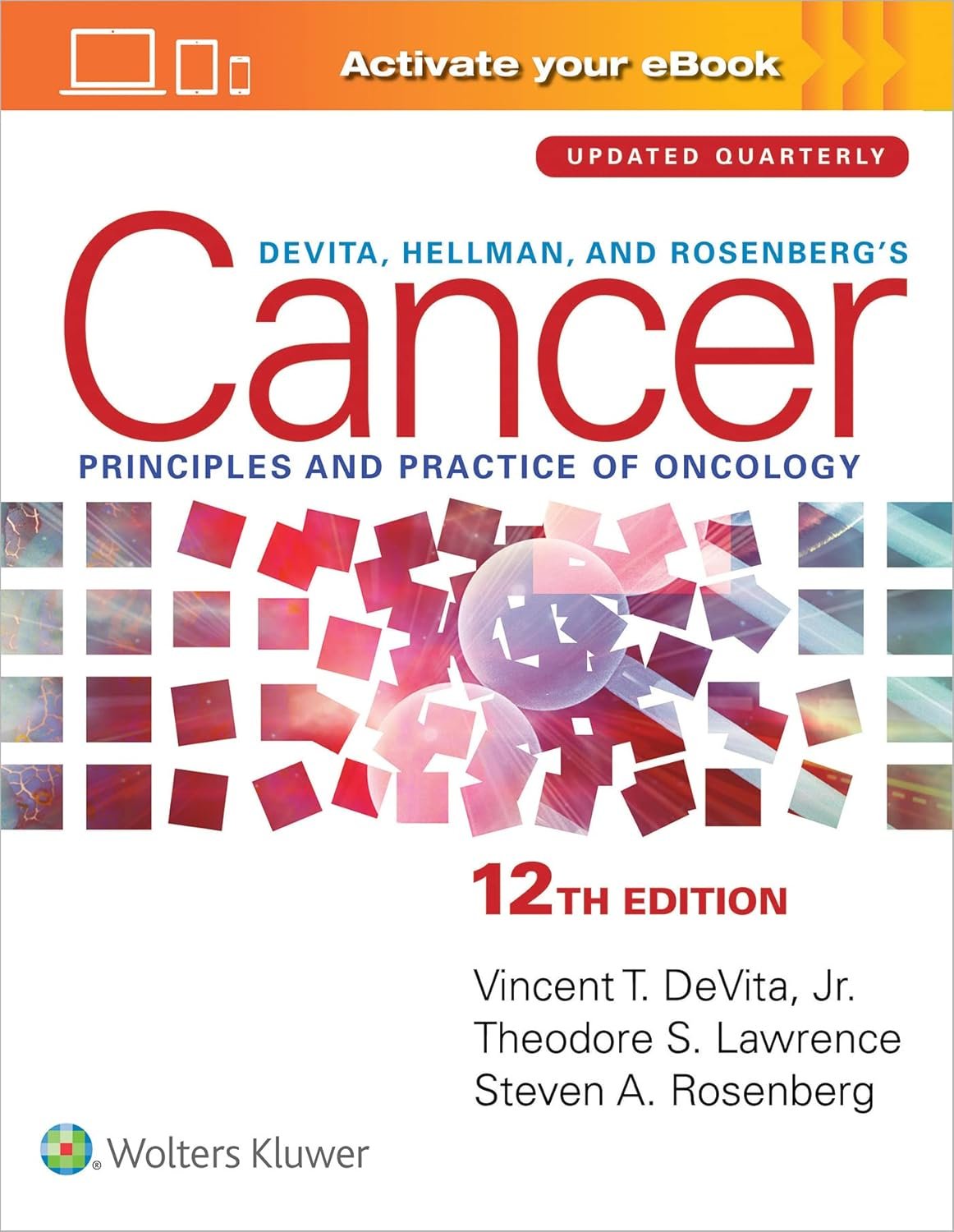
DeVita, Hellman, and Rosenberg’s Cancer: Principles & Practice of Oncology — Book Description
DeVita, Hellman, and Rosenberg’s Cancer: Principles & Practice of Oncology is a comprehensive reference dedicated to the scientific foundations, clinical principles, diagnosis, treatment, and multidisciplinary management of cancer. Oncology is one of the most rapidly evolving areas of modern medicine, incorporating advances in molecular biology, genetics, pathology, imaging, surgery, radiation therapy, systemic treatments, immunology, and precision medicine. This book brings together these diverse areas to provide a broad framework for understanding cancer and its management.
Cancer is not a single disease but a large group of disorders characterized by abnormal cellular growth and complex interactions between tumor cells, surrounding tissues, the immune system, and the wider biological environment. Understanding cancer therefore requires knowledge that extends from basic cellular and molecular mechanisms to clinical diagnosis and long-term patient care. This textbook explores these interconnected areas and provides readers with a detailed perspective on contemporary oncology.
A fundamental focus of the book is the biology of cancer. Readers are introduced to the cellular and molecular processes involved in malignant transformation, tumor development, progression, invasion, and metastasis. Understanding these mechanisms is essential because modern cancer treatment increasingly depends on identifying specific biological characteristics of individual tumors. The book connects foundational cancer biology with the clinical decisions made during diagnosis and treatment.
Cancer genetics and molecular oncology are also important components. Genetic alterations can influence how cancers develop, behave, and respond to therapy. Advances in molecular testing have made it increasingly possible to identify specific alterations within tumors and use this information to guide treatment decisions. The book explores the role of genetics and molecular biology in modern cancer care and explains how scientific discoveries can translate into clinical applications.
The text provides a broad discussion of cancer prevention and risk reduction. Many cancers are associated with a combination of genetic, environmental, behavioral, infectious, occupational, and other factors. Understanding these risk factors can contribute to prevention strategies and earlier recognition of disease. The book examines the importance of prevention, risk assessment, screening, and public-health approaches in reducing the burden of cancer.
Cancer screening and early detection represent another major area of oncology. Detecting cancer at an earlier stage can influence treatment options and clinical outcomes for certain diseases. The book discusses the principles behind screening programs, diagnostic evaluation, risk-based approaches, and the interpretation of clinical findings. It emphasizes the importance of balancing the potential benefits of early detection with the limitations and risks associated with screening.
A comprehensive understanding of cancer also requires knowledge of pathology and diagnostic evaluation. The diagnosis of cancer may involve tissue examination, cytology, molecular testing, laboratory studies, imaging, and other diagnostic techniques. The book explains how these different sources of information contribute to establishing a diagnosis, determining tumor characteristics, and assessing disease extent.
Cancer staging is another essential component of clinical oncology. Determining the extent of a malignancy helps clinicians understand prognosis and select appropriate treatment strategies. Staging may involve physical examination, imaging studies, pathology, laboratory findings, and other investigations. The book explores the importance of accurate staging and its role in clinical decision-making.
The textbook provides extensive coverage of systemic cancer therapy, including traditional cytotoxic treatments and newer therapeutic approaches. Systemic therapies can affect cancer cells throughout the body and are used in a variety of clinical situations. The book examines the principles behind these treatments, their clinical applications, treatment planning, response assessment, and important considerations related to toxicity and patient safety.
One of the major developments in modern oncology is targeted therapy. Advances in molecular biology have enabled researchers to identify specific biological pathways and molecular alterations that contribute to cancer growth. Targeted treatments are designed to interfere with particular mechanisms involved in tumor development. The book discusses the principles of targeted treatment and the importance of selecting therapies according to the biological characteristics of individual cancers.
Immunotherapy has also transformed the treatment landscape for several malignancies. The immune system plays an important role in recognizing and responding to abnormal cells, and modern therapies can modify immune responses to help the body fight cancer. The book explores the scientific foundations and clinical applications of cancer immunology and discusses the expanding role of immune-based treatments in oncology.
Another major area is radiation oncology. Radiation therapy uses carefully planned radiation to treat malignant disease and may be used alone or in combination with other treatments. The book discusses the principles of radiation treatment, clinical indications, treatment planning, and the role of radiation within multidisciplinary cancer care.
Surgical oncology remains an essential part of treatment for many solid tumors. Surgery can be used for diagnosis, staging, local control, symptom management, or potentially curative treatment depending on the type and extent of disease. The book examines the role of surgery within comprehensive cancer management and highlights the importance of collaboration between surgeons, medical oncologists, radiation oncologists, pathologists, radiologists, and other specialists.
The concept of multidisciplinary cancer care is central to modern oncology. Cancer patients frequently require several types of treatment and specialized expertise. Decisions may involve tumor boards and collaboration among multiple healthcare professionals. The book emphasizes coordinated care and the importance of developing treatment plans that consider disease characteristics, patient circumstances, treatment goals, and available evidence.
Precision oncology and personalized cancer treatment represent another important theme. Patients with the same type of cancer may have different molecular characteristics and may respond differently to treatment. Advances in genomic profiling and biomarker testing can help identify potentially useful therapeutic approaches for selected patients. The book explores how molecular information can contribute to individualized cancer care while recognizing the importance of clinical evidence and appropriate patient selection.
The book also addresses metastatic and advanced cancer. When cancer spreads to distant organs, treatment often becomes more complex and may focus on disease control, symptom management, prolongation of life, and preservation of quality of life. The text discusses the clinical challenges associated with advanced disease and the importance of individualized treatment goals.
Cancer treatment complications and supportive care are equally important. Patients receiving cancer therapy may experience a variety of treatment-related effects that require careful monitoring and management. Supportive oncology focuses on helping patients tolerate treatment, manage symptoms, maintain function, and receive comprehensive care throughout the cancer journey.
Another important aspect is palliative and end-of-life care. Oncology involves not only attempts to control or eliminate cancer but also the responsibility to address pain, symptoms, emotional concerns, communication, and quality of life. The book recognizes the importance of patient-centered care and appropriate supportive services throughout different stages of illness.
Survivorship and long-term follow-up have become increasingly important as more patients live longer after cancer treatment. Survivorship care may involve monitoring for recurrence, managing long-term treatment effects, addressing physical and psychological concerns, and supporting patients as they transition beyond active treatment. The book considers the continuing healthcare needs of cancer survivors.
The text also highlights the importance of clinical research and evidence-based oncology. New cancer therapies and diagnostic approaches are continually being developed and evaluated through clinical trials and scientific investigation. Understanding clinical evidence allows healthcare professionals to assess emerging treatments and make informed decisions about patient care.
For medical students, residents, fellows, oncologists, surgeons, radiation specialists, pathologists, researchers, and other healthcare professionals, DeVita, Hellman, and Rosenberg’s Cancer: Principles & Practice of Oncology offers a broad educational foundation for understanding the complexity of cancer medicine. Its multidisciplinary perspective connects fundamental scientific discoveries with practical clinical applications.
Ultimately, modern oncology is built upon the integration of cancer biology, accurate diagnosis, staging, evidence-based treatment, molecular science, multidisciplinary collaboration, supportive care, and patient-centered decision-making. As cancer research continues to advance, clinicians must remain prepared to evaluate new evidence and incorporate appropriate innovations into practice.
DeVita, Hellman, and Rosenberg’s Cancer: Principles & Practice of Oncology provides readers with an extensive perspective on the principles and practice of contemporary cancer care. By bringing together foundational science and clinical oncology, the book helps readers understand how cancer is studied, diagnosed, treated, monitored, and managed across the full spectrum of disease. It serves as a valuable educational resource for anyone seeking a deeper understanding of the science and practice of modern oncology.



Reviews
There are no reviews yet.