
Description
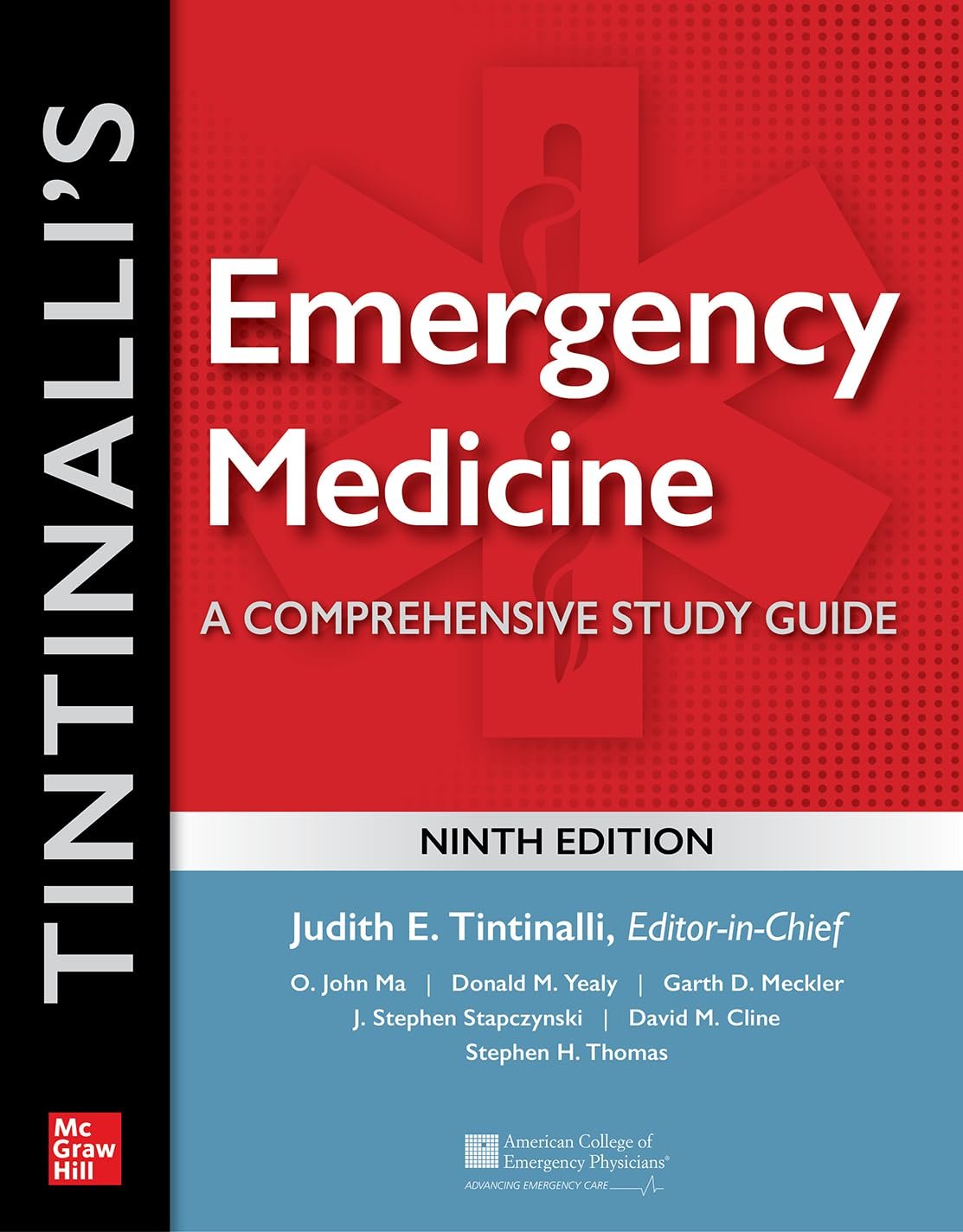
Tintinalli’s Emergency Medicine — Book Description
Tintinalli’s Emergency Medicine is a comprehensive reference for understanding the principles and practice of emergency medicine. Emergency departments are environments where healthcare professionals must rapidly assess patients, identify potentially life-threatening conditions, prioritize care, and begin appropriate management. This book provides an extensive overview of the knowledge and clinical approaches needed to evaluate a broad range of urgent and emergency presentations.
Emergency medicine requires a unique combination of medical knowledge, clinical reasoning, rapid decision-making, communication, and teamwork. Patients may arrive with symptoms that range from relatively minor complaints to immediately life-threatening conditions. Because the initial presentation of serious illness can sometimes be subtle or nonspecific, emergency clinicians must be able to recognize important warning signs while simultaneously considering a wide range of possible diagnoses. Tintinalli’s Emergency Medicine provides a structured foundation for understanding these challenges.
A central theme of the book is the initial assessment and stabilization of the acutely ill or injured patient. Readers are introduced to systematic approaches for evaluating patients, identifying immediate threats, and determining which conditions require urgent intervention. The text emphasizes the importance of prioritizing airway, breathing, circulation, neurologic status, and other essential aspects of emergency assessment.
The book covers a broad range of medical emergencies, providing readers with an organized framework for understanding common and serious presentations. Topics include cardiovascular emergencies, respiratory disorders, neurologic conditions, gastrointestinal problems, infectious diseases, endocrine and metabolic emergencies, renal and urologic conditions, hematologic disorders, and other acute medical problems. By considering these conditions from an emergency perspective, readers can better understand how symptoms, examination findings, diagnostic testing, and clinical context contribute to patient evaluation.
Cardiovascular emergencies represent an important area of emergency medicine. Acute chest discomfort, shortness of breath, abnormal heart rhythms, circulatory instability, and other cardiovascular presentations may require rapid evaluation. The book discusses approaches to recognizing and assessing serious cardiovascular conditions and emphasizes the importance of timely clinical decision-making.
The text also addresses respiratory emergencies, including acute breathing difficulties and conditions that can compromise oxygenation or ventilation. Emergency clinicians must quickly determine the severity of respiratory problems and identify patients who require immediate support. The book provides a broad overview of assessment strategies and emergency management principles.
Another major component is the evaluation of neurologic emergencies. Sudden changes in mental status, weakness, seizures, severe headache, dizziness, and other neurologic symptoms may have numerous causes. The book examines systematic approaches to neurologic assessment and discusses important emergency conditions where rapid recognition and intervention can influence outcomes.
Trauma and injury management are also essential components of emergency medicine. Emergency departments frequently care for patients with injuries resulting from accidents, falls, sports, occupational incidents, and other circumstances. The book explores principles of trauma assessment, injury recognition, stabilization, diagnostic evaluation, and coordination of multidisciplinary care.
The book further addresses pediatric emergencies, recognizing that children differ from adults in anatomy, physiology, communication, disease patterns, and responses to illness or injury. Emergency evaluation of infants, children, and adolescents requires age-appropriate assessment and careful attention to clinical changes. The text provides guidance for understanding important pediatric presentations within the emergency-care setting.
Geriatric emergency medicine receives attention as well. Older adults may have multiple medical conditions, take several medications, and present with atypical symptoms. Emergency clinicians must consider these factors when evaluating acute changes in health. The book explores the complexities of assessing older patients and the importance of identifying serious illness despite less obvious presentations.
Another important area is toxicology and environmental emergencies. Emergency departments may encounter patients affected by medication-related problems, toxic exposures, environmental conditions, or other acute hazards. The book provides an overview of recognizing these presentations and understanding the principles of emergency evaluation and management.
Infectious and acute inflammatory conditions are also important in emergency practice. Some infections can progress rapidly and may require immediate recognition and treatment. The book discusses the emergency evaluation of patients with suspected serious infection, systemic illness, and other infectious presentations, emphasizing the importance of clinical assessment and timely management.
The text also considers obstetric and gynecologic emergencies, which require specialized knowledge and careful assessment. Acute abdominal or pelvic symptoms, pregnancy-related complications, bleeding, and other urgent presentations may require rapid evaluation and coordination with appropriate specialists. The book provides an emergency-focused framework for approaching these clinical situations.
Psychiatric and behavioral emergencies are another important component of emergency care. Emergency clinicians may evaluate patients experiencing acute changes in behavior, severe emotional distress, altered mental states, or other behavioral health concerns. The book addresses the principles of assessment, safety, communication, and appropriate clinical management within emergency settings.
Diagnostic evaluation is another major theme. Emergency medicine frequently involves making decisions with incomplete information and under significant time constraints. Laboratory testing, electrocardiography, imaging, point-of-care testing, and other diagnostic tools can provide valuable information. The book explains how diagnostic findings should be interpreted in the context of the patient’s history and examination rather than viewed in isolation.
The book also emphasizes clinical reasoning and differential diagnosis. Many emergency complaints can result from numerous underlying conditions. For example, a single symptom may have causes ranging from benign to life-threatening. Developing an organized differential diagnosis allows clinicians to identify dangerous possibilities while avoiding unnecessary testing or treatment. The text supports this process by presenting conditions according to clinical presentations and emergency-care priorities.
Procedural and practical aspects of emergency medicine are also important. Emergency clinicians may need to perform or understand a variety of procedures and interventions as part of patient care. The book provides a broad educational framework for emergency procedures, emphasizing appropriate patient assessment, preparation, indications, contraindications, complications, and follow-up considerations.
Modern emergency medicine also depends heavily on teamwork and communication. Emergency departments bring together physicians, nurses, technicians, pharmacists, consultants, paramedics, and other professionals. Effective communication and coordination can be critical, particularly when caring for seriously ill patients. The book highlights the multidisciplinary nature of emergency care and the importance of organized clinical workflows.
Another significant topic is evidence-based emergency medicine. Medical knowledge continues to evolve, and clinicians must remain aware of current evidence, diagnostic approaches, treatment strategies, and clinical guidelines. A comprehensive emergency medicine reference can help readers develop a structured understanding of established principles while encouraging continued learning and critical evaluation of new evidence.
Tintinalli’s Emergency Medicine is therefore valuable not only as a reference for emergency medicine learners but also as a broad educational resource for healthcare professionals interested in acute care. Its wide-ranging coverage helps readers connect foundational medical knowledge with the practical challenges of emergency patient evaluation.
The book ultimately presents emergency medicine as a discipline built around rapid recognition, prioritization, clinical reasoning, stabilization, and coordinated care. It emphasizes that successful emergency practice requires more than memorizing diseases. Clinicians must understand how patients present, recognize patterns of serious illness, interpret available information, reassess patients over time, and adapt their decisions as new information becomes available.
For medical students, residents, emergency medicine trainees, healthcare professionals, educators, and readers seeking a deeper understanding of acute medical care, Tintinalli’s Emergency Medicine offers a broad and valuable perspective on the field. Its comprehensive approach makes it a useful resource for exploring the many clinical situations encountered in emergency departments.
As emergency medicine continues to evolve with advances in diagnostics, technology, critical care, trauma management, and evidence-based practice, comprehensive resources remain essential for building and maintaining clinical knowledge. Tintinalli’s Emergency Medicine provides readers with an extensive foundation for understanding the evaluation and management of patients presenting with urgent and potentially life-threatening conditions, while reinforcing the importance of careful assessment, sound clinical judgment, patient safety, and multidisciplinary collaboration.

Reviews
There are no reviews yet.